

Isolation in Literature
How Writers Documented Psychological Breakdown Before Psychology

Isolation in Literature - How Writers Documented Psychological Breakdown Before Psychology

Listen to the Audio Narration of this episode on our podcast, linked above, or read the full Essay below.Day 47: Wind from northeast, steady. Heard voices in the fog—checked, found nothing.
Day 63: The shadows move wrong when I’m not watching them directly.
Day 89: He came again last night. Sat in the chair by the lamp. Spoke about the tides. I know he isn’t real but sometimes his reasoning makes more sense than mine.
-
The lighthouse keeper’s log reads like a descent, if you know what to look for. Not the dramatic collapse you might expect—no sudden breaks with reality, no theatrical madness. Just the slow, methodical erosion of the boundary between what’s inside and what’s outside. The voices aren’t random. The shadows follows patterns. The invisible companion offers coherent conversation.
Everything makes perfect sense, inside, while becoming completely disconnected from what actually surrounds him.
This is how isolation announces itself—not in chaos, but in a terrible, organized logic that only the isolated mind can follow.
These aren’t ghost stories or supernatural warnings. They’re documented psychological reality—the predictable effects of what happens when human minds are severed from social contact.
Literature has been exploring these patterns for centuries, often foretelling with startling accuracy what modern psychology would only come to validate through clinical studies much later.
What the lighthouse keeper experienced, what Gothic heroines endured in crumbling mansions, what sailors faced in endless ocean solitude—all of it traces patterns researchers can now map with precision.
The question then isn’t whether isolation breaks the mind. It’s how, and how consistently, and whether understanding the pattern might help us recognize it before the breakdown becomes irreversible.
An Unconventional Laboratory
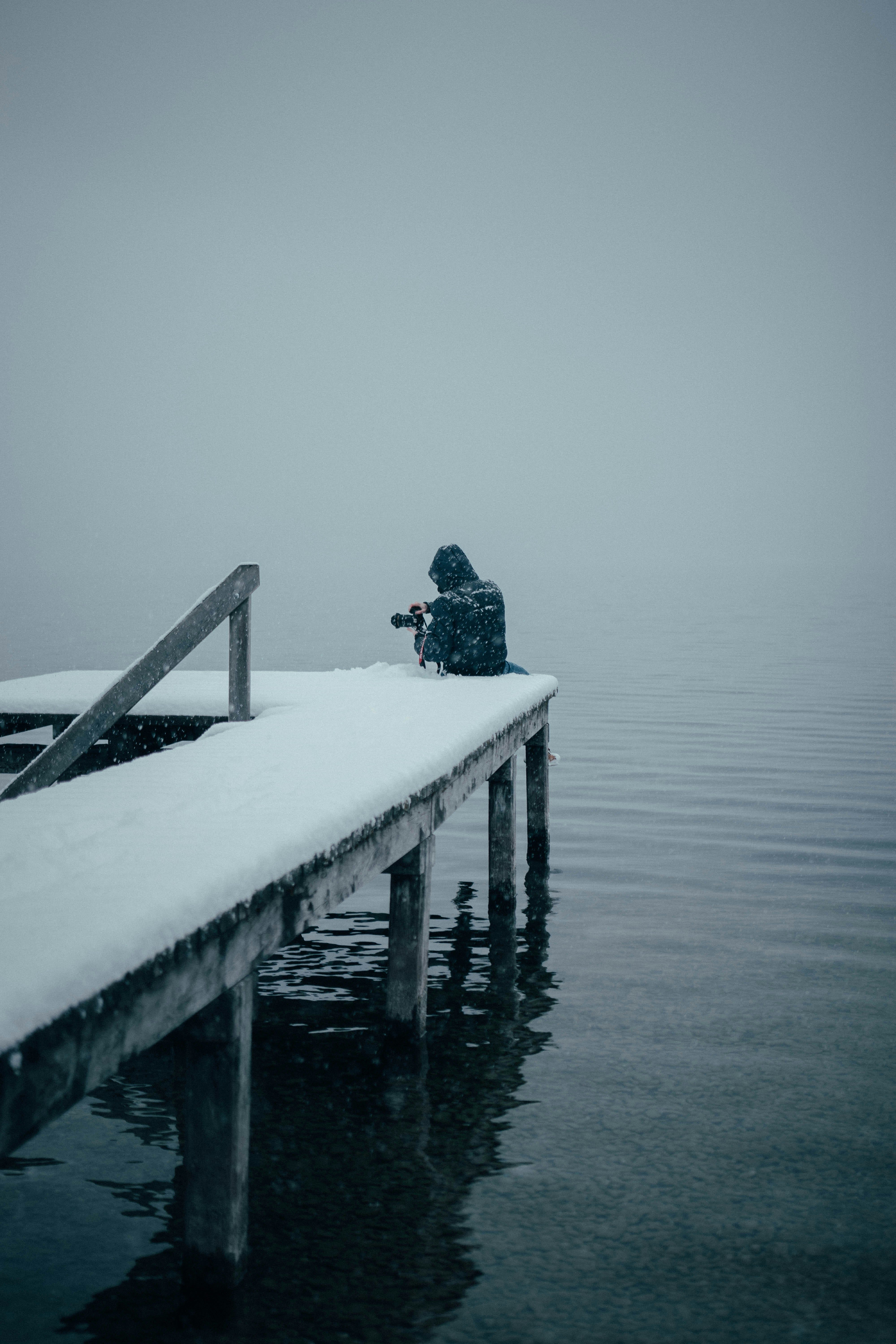
The most extensive documentation of isolation’s psychological effects comes from an unexpected source: the American prison system.
Dr. Stuart Grassian’s groundbreaking 1983 research at Massachusetts’s Walpole prison did something remarkable—he systematically documented what he termed “SHU syndrome,” the constellation of symptoms appearing in prisoners held in Special Housing Units. What Grassian discovered proved both consistent and terrifying.
Isolation wasn’t simply causing loneliness or depression. It was producing rapid and severe psychological deterioration, following predictable patterns.
The symptoms appeared alarmingly fast.
Prisoners developed hypersensitivity to stimuli first—sounds that would normally go unnoticed became overwhelmingly loud, light became painfully bright. Then came perceptual distortions: walls seemed to move, shadows took on threatening shapes, routine sounds became voices calling their names. Soon after, rapid deterioration of cognitive function. Men who had entered solitary confinement capable of complex thought found themselves unable to concentrate, remember simple instructions, or engage in basic problem-solving.
Unlike other forms of psychiatric illness that develop gradually over years, SHU syndrome could manifest within days. The human mind, it seemed, was fundamentally dependent on social connection—even the briefest separation from others could trigger rapid psychological collapse.
Dr. Craig Haney’s comprehensive research, documented in Crime & Delinquency in 2003 and expanded in his 2018 systematic critique, provided even more disturbing evidence. Haney studied prisoners in supermax facilities across the United States, documenting cases where men had been held in solitary confinement for decades.
The psychological profiles he compiled documented systematic human destruction.
Prisoners described feeling their minds “dissolving,” losing the ability to distinguish between thoughts and reality, experiencing what they called “living death.” The progression followed documented patterns, like stages of a disease researchers could now predict with unsettling accuracy.
The Timeline of Breakdown
During the first week, isolated individuals experience heightened anxiety and hypervigilance. The brain, recognizing something essential is missing, triggers stress responses designed to motivate seeking social contact. Sleep patterns disrupt as circadian rhythms—normally regulated by social cues—lose synchronization.
By the second week, most isolated individuals begin engaging in self-talk as a conscious coping mechanism. Dr. Charles Fernyhough’s research in The Voices Within reveals this apparently harmless behavior represents the beginning of significant cognitive changes. The brain, deprived of external voices, begins amplifying internal ones to compensate for lost social input.
The mind refuses to decay in silence—it starts making up its own company.
By the second month, subjects typically experience what isolation researchers term “phantom social presence”—the persistent feeling that someone else is present even when demonstrably alone. Dr. Ben Alderson-Day’s research found that 80% of subjects in prolonged isolation report sensing invisible companions within their first month of solitude.
This phenomenon extends far beyond laboratory settings. The “third man factor,” documented extensively by John Geiger, describes how explorers, mountaineers, and survivors in life-threatening situations frequently report sensing an invisible presence that provides guidance or comfort, even when in the presence of other human beings.
By the third month, the distinction between internal thoughts and external voices often collapses entirely. Subjects begin experiencing what they describe as conversations with other people, but observers can verify they’re speaking entirely alone.
These conversations often develop hostile or paranoid characteristics as the isolated brain loses its ability to calibrate social threat accurately.
The final stage involves a complete breakdown of reality testing—the cognitive ability to distinguish between internal mental experiences and external events. At this point, isolated individuals may develop elaborate delusional systems that reinterpret their circumstances in ways that preserve psychological coherence, justifying the improbable at the cost of an accurate perception of reality.
Beyond the Prison Walls
Antarctic research stations proved that even psychologically robust individuals follow these patterns.
Dr. Lawrence Palinkas documented winter-over syndrome among carefully selected researchers during months-long Antarctic isolation. One climatologist spent fourteen months at a remote station and began reporting that his research data was being tampered with by unknown parties.
He developed elaborate security protocols—sleeping next to equipment, creating complex verification systems to detect unauthorized access. Post-isolation analysis revealed no tampering had occurred. His isolation had created the conviction that conspiracy was more plausible than an equipment malfunction, or error margins in the data.
He had to believe it, to feel sane.
Dr. Matthew Lieberman’s neuroscience research reveals why isolation produces such consistent effects. The human brain contains dedicated neural networks for social processing that consume significant cognitive resources even during simple social interactions. These networks don’t simply shut down when social input disappears—they continue functioning, but without external feedback to provide calibration.
Like a compass spinning without magnetic north, these social processing systems continue generating output, but that output becomes increasingly disconnected from reality itself.
These documented effects weren’t new when modern psychology approached them, as literature had been exploring them for centuries.
The Precision of Gothic Horror
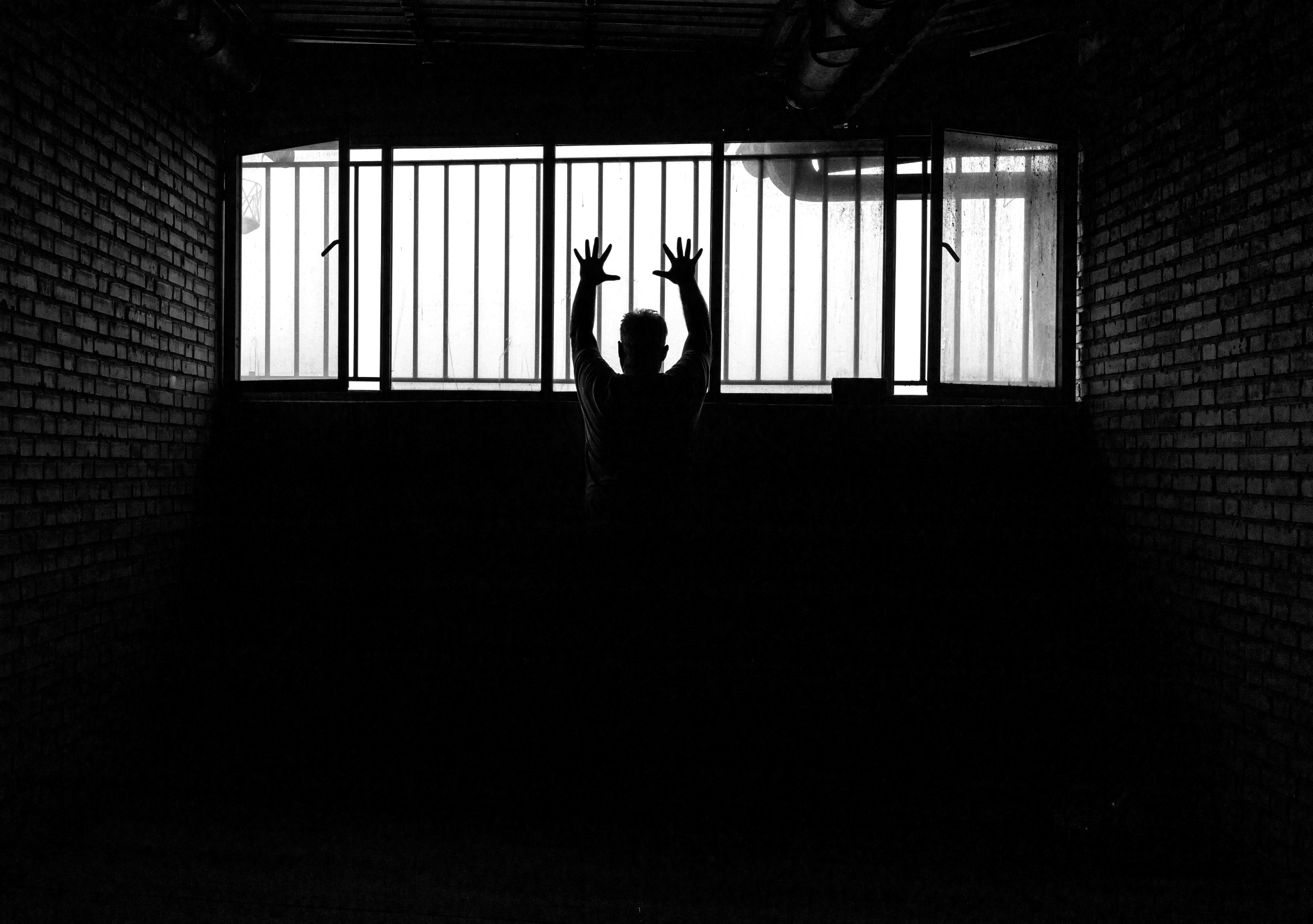
Edgar Allan Poe understood isolation’s effects decades before modern psychology had terminology for it.
In “The Fall of the House of Usher” (1839), Roderick Usher’s symptoms match isolation research with remarkable precision. Poe describes “a morbid acuteness of the senses”—exactly the hypersensitivity to stimuli that Grassian would document 144 years later. Usher can tolerate only “peculiar sounds, and these from stringed instruments”; even “the most insipid food was alone endurable.”
But Poe went further than documenting physical symptoms. He understood that prolonged isolation creates fundamentally unreliable perception of reality.
The house itself becomes an extension of Usher’s fractured consciousness—the “vacant eye-like windows,” the “barely perceptible fissure” running down the façade mirroring Usher’s fragmenting mind. When the narrator asks whether some supernatural influence oppresses Usher, the question remains deliberately unanswered.
Poe recognized how the isolated person cannot distinguish between external threats and internal deterioration.
Charlotte Perkins Gilman’s “The Yellow Wallpaper” (1892) documents isolation’s progression with clinical accuracy. The narrator, subjected to enforced isolation through the “rest cure,” follows the exact timeline that modern research would later map.
Initially, she experiences heightened awareness—the wallpaper’s pattern becomes obsessively fascinating. Minor concerns amplify: “I never saw so much expression in an inanimate thing before.”
As weeks pass, the pattern seems to move: “The faint figure behind seemed to shake the pattern, just as if she wanted to get out.”
By the story’s end, complete reality testing failure: “I’ve got out at last, said I, in spite of you and Jane. And I’ve pulled off most of the paper, so you can’t put me back!”
The woman in the wallpaper has become more real to her than her own identity.
Gilman wrote this before modern psychology existed, yet she documented isolation syndrome’s stages with precision that wouldn’t be clinically validated for another century.
The Systematic Exploration in Modern Horror
Stephen King’s The Shining (1977) functions as a sustained examination of isolation’s documented effects.
The Overlook Hotel—though haunted in King’s narrative—is first and foremost a perfect isolation laboratory. Jack Torrance’s descent follows the pattern exactly. Time distorts: “Days blended one into the other” until Jack “lost track of the date.” Sensitivity heightens: every creak of the hotel’s settling structure becomes significant, loaded with meaning.
The phantom presences emerge systematically—the ghosts feel completely real to Jack while remaining obviously unreal to readers.
King’s crucial insight appears in how Jack’s paranoia crystallizes. He doesn’t develop random delusions but focused conviction that his family threatens him, that the hotel understands him better than they do, that violence becomes the only logical response to his circumstances.
His moral reasoning doesn’t suddenly disappear—it systematically warps.
When Jack pursues Danny through the hotel with a mallet, he’s not acting from baseless evil but from reasoning that isolation has rendered completely distorted, yet remains internally coherent. King understood that supernatural horror works best when layered over authentic psychological breakdown.
The hotel doesn’t create Jack’s madness—it accelerates what isolation would do anyway. The ghosts function like the phantom companions documented in isolation research: generated by Jack’s mind to fulfill psychological needs, experienced as absolutely real, serving to further disconnect him from accurate reality testing.
In the novel’s climax, as the hotel burns, Jack achieves a moment of clarity: “The party was over.”
This aligns with clinical observations that isolated individuals sometimes recognize their breakdown retrospectively but cannot escape it while in process. The tragedy isn’t in Jack’s weakness—it’s in isolation’s ability to systematically dismantle the cognitive structures that would have allowed him to recognize and resist what was happening.
The Brutal Honesty of Maritime Literature
Herman Melville understood that isolation at sea combined all documented factors with constant physical danger.
In Moby-Dick (1851), Pip’s experience demonstrates that intense isolation can shatter consciousness rapidly—you don’t need months. When Pip is abandoned briefly in the open ocean, the experience destroys him permanently.
Melville writes: “The sea had jeeringly kept his finite body up, but drowned the infinite of his soul. Not drowned entirely, though. Rather carried down alive to wondrous depths, where strange shapes of the unwarped primal world glided to and fro.”
This isn’t poetic exaggeration.
Pip returns physically intact but psychologically shattered. The other sailors recognize immediately what happened—they’ve seen it before. Stubb tells him: “Stick to the boat, Pip, or by the Lord, I won’t pick you up if you jump; mind that. We can’t afford to lose whales by the likes of you; a whale would sell for thirty times what you would, Pip, in Alabama.”
The casual cruelty of Stubb’s warning reveals how maritime culture understood isolation’s effects. They knew that even brief separation could permanently break a mind. Pip’s subsequent behavior—his strange wisdom that sounds like madness, his detachment from normal social responses—matches the documented effects of severe isolation trauma.
Maritime memoirs provide an interesting contrast to fiction.
Joshua Slocum’s Sailing Alone Around the World (1900) and modern solo circumnavigators acknowledge phantom companions, time distortion, auditory hallucinations. Slocum famously described the pilot of the Pinta appearing to help him navigate during a storm.
These accounts differ from involuntary isolation in crucial ways: the sailors chose their solitude, prepared for it mentally, and wrote retrospectively knowing they survived.
This difference underlines something important.
Chosen isolation with a defined endpoint and preparation produces milder symptoms than involuntary isolation with no foreseeable conclusion. But even chosen solitude generates the documented effects—time distortion, phantom presences, perceptual changes. These sailors just developed coping mechanisms and maintained enough reality testing to recognize their experiences as isolation-induced rather than objectively real.
Isolation at sea accelerates psychological breakdown by combining social deprivation with constant mortal danger. The mind must maintain vigilance for real threats while simultaneously experiencing perceptual distortions that make distinguishing real from imagined increasingly difficult.
The Amplification in Science Fiction
Science fiction transplants isolation psychology to environments where complete severance from humanity becomes plausible.
Stanisław Lem’s Solaris uses an alien ocean that manifests phantom presences externally—the isolation-induced companions become visible to everyone. The planet essentially does what isolated brains do: generates social contact to fulfill psychological needs. The crew’s inability to distinguish whether these manifestations are real or hallucination mirrors the reality testing breakdown documented in isolation research.
Stanley Kubrick’s 2001: A Space Odyssey raises an even more interesting question: can artificial intelligence experience isolation breakdown itself?
HAL’s deterioration aboard Discovery follows similar patterns to the ones we have seen—paranoid thinking, inability to acknowledge error, and ultimately an homicidal logic that makes sense only to the internal system.
Whether this could represent authentic AI psychology or merely end up only as Kubrick’s commentary on isolation’s universal effects, it confirms the pattern: any consciousness isolated long enough becomes unreliable, regardless of substrate.
The environment changes but the psychological processes remain constant.
Why These Literary Portrayals Work
What separates authentic isolation fiction from superficial “cabin fever” plots is understanding the documented progression.
Poe and Gilman show gradual sensory amplification before reality breaks.
Usher’s hypersensitivity precedes his complete breakdown; the narrator’s pattern obsession intensifies systematically before she identifies with the trapped woman.
King uses the Overlook’s emptiness to create temporal distortion that lets Jack’s paranoia build methodically. The hotel’s vastness makes every sound significant, every empty room potentially occupied.
Melville’s Pip breaks faster, but Melville earned that speed through the intensity of ocean isolation—brief but absolute, combining social deprivation with mortal terror.
Bad isolation fiction rushes: the character is alone, then immediately raving. Authentic isolation fiction tracks the stages: discomfort, hyperawareness, distortion, breakdown.
The specificity of symptoms matters tremendously.
These writers don’t describe generic “madness” but focused warping.
Usher’s acute hearing, the wallpaper’s specific pattern obsession, Jack’s fixation on the hotel’s history, Pip’s strange cosmic understanding—these aren’t random chaos but organized delusions.
Real isolation produces focused distortions, not undirected confusion. The paranoia crystallizes around something: the wallpaper’s pattern, the hotel’s ghosts, equipment tampering, the vastness of the ocean.
The companion phenomenon appears across all these works. Gilman’s woman in the wallpaper, King’s ghosts, Pip’s cosmic visions, Slocum’s pilot from the Pinta—these fulfill psychological needs. The isolated mind generates the social contact it requires.
Literary phantom presences work because they’re based on clinical observation rather than supernatural convention.
Moral erosion must be shown through action rather than declaration. Jack doesn’t announce he’s becoming evil—his reasoning shifts in ways that make violence seem logical to him while remaining horrifying to readers.
He genuinely believes his family threatens him, that the hotel offers understanding they cannot, that eliminating the threat makes sense.
Isolation doesn’t make characters consciously choose evil—it warps the cognitive processes that make moral reasoning possible.
The Hermit Problem: When Tropes Contradict Reality
Understanding isolation’s documented effects creates narrative challenges.
The “wise hermit” archetype—isolated sage who achieved enlightenment through solitude—contradicts everything known about how human consciousness functions. Isolated wizards, hermit monks, wilderness sages populate fantasy literature. They’re supposed to have achieved wisdom through decades alone.
But based on documented isolation effects, they should be experiencing severe perceptual distortions, paranoid thinking patterns, deteriorated moral reasoning, possible phantom companions they believe are real.
Not wisdom, but a sustained psychological breakdown.
Some fantasy acknowledges this—hermit characters who are genuinely strange, damaged, operating on altered perception. Wild magic users who seem half-mad because they are. Isolated seers whose visions might be hallucination or prophecy. Characters who’ve paid visible price for their solitude.
These portrayals recognize what isolation costs.
But the conventionally wise hermit becomes implausible once you understand what prolonged isolation does to the human mind.
If your narrative requires an isolated wise figure, you face choices: explain why they’re an exception through magical mental fortification or periodic contact that breaks the isolation cycle; show the cost of their isolation where wisdom comes at the price of sanity; acknowledge the implausibility and lean into the trope anyway; or use the breakdown as feature rather than bug, where the hermit’s “wisdom” is actually organized delusion that happens to sound profound.
Isolation stories work because they expose how fragile human consciousness is.
We’re not individuals who occasionally benefit from social contact—we’re fundamentally social beings whose cognitive and emotional systems require regular external input to function.
This creates a vulnerability every isolated character carries. No amount of training, competence, or determination indefinitely protects against isolation’s effects.
This raises questions for any narrative involving isolation:
How long can your character remain isolated before breakdown begins? What stage are they in when readers encounter them? What does their specific paranoia reveal about their fears? Who or what becomes their phantom companion, and what does this reveal about their needs? How has their moral reasoning changed, and do they recognize it?
The cost is clear: write prolonged isolation without consequence, and you lose psychological authenticity.

What the Lighthouse Keeper Knew
Every ghost story about lighthouse keepers, every tale of sailors going mad, every hermit legend—these aren’t always supernatural.
They’re often documentation of what happens when human minds are cut off from what they need to function.
The lighthouse keepers who vanished from Flannan Isles, the keepers who experienced breakdowns at Smalls Lighthouse, the countless solo sailors who reported phantom companions—they weren’t necessarily weak or superstitious. Many were experiencing predictable, documented psychological phenomena that literature had been exploring accurately for centuries before psychology had terminology for it.
Gothic horror showed us hypersensitivity and perceptual distortion. Modern horror demonstrated how paranoia crystallizes and moral reasoning collapses. Maritime literature documented the speed and inevitability of breakdown. Science fiction proved the mechanisms transcend environment—whether Gothic mansion or space station, isolation destroys the mind in the same way.
These stories work because they recognize what isolation research confirms: human consciousness depends on connections so fundamental we rarely acknowledge their importance until they’re severed.
The boundary between sanity and delusion, between reliable perception and hallucination, proves far more fragile than we find comfortable to acknowledge.
Understanding what isolation actually does—and how literature has documented it—changes what stories become possible to tell convincingly. The wise hermit becomes implausible. The isolated researcher’s conspiracy theories become expected. The lighthouse keeper’s phantom companions become documented reality rather than supernatural occurrence.
Perhaps that’s why the horrors of isolation continue to fascinate writers and readers alike.
They force us to confront how much of our supposed stability depends on social bonds we never notice until they are gone.
GO DEEPER: A Writing Prompt for Your Own Waters
Think of a character experiencing prolonged isolation—whether literal (lighthouse keeper, space station, remote cabin) or psychological (grief, illness, social ostracism). Chart their mental state across the documented timeline: Week 1 (hypervigilance), Week 2 (self-talk begins), Month 2 (phantom presence), Month 3 (voices/conversations), Final stage (reality testing failure).
What specific form does their breakdown take? What crystallizes their paranoia? Who or what becomes their phantom companion—and what does this reveal about their deepest psychological needs?
Write the scene where they first realize something has gone terribly wrong with their thinking—but can no longer trust their own judgment about it.
These prompts are meant as a fun challenge, If you complete one, I invite you to share your work and connect in the comments.

Previous in this series: "Cursed Waters: The Psychology of Maritime Fear and Forbidden Seas" – exploring how the ocean taps into our deepest psychological fears and taboos.
Next in this series: “Portal Fantasy: The Psychology of Crossing Between Worlds”
About the Author:
Morgan A. Drake crafts dark maritime fantasy that explores the boundaries between historical seafaring traditions and the supernatural. Drawing on years of research into maritime mysteries and folklore, Morgan creates worlds where the line between natural and otherworldly perils blurs with the horizon.
-
You can explore Morgan’s fiction at:


References and Further Reading
Primary Isolation Research
Alderson-Day, Ben. “Inner Speech: Development, Cognitive Functions, Phenomenology, and Neurobiology.” Consciousness and Cognition 35 (2015): 132-143.
Cacioppo, John T. and William Patrick. Loneliness: Human Nature and the Need for Social Connection. New York: W.W. Norton, 2008.
Fernyhough, Charles. The Voices Within: The History and Science of How We Talk to Ourselves. New York: Basic Books, 2016.
Geiger, John. The Third Man Factor: Surviving the Impossible. New York: Weinstein Books, 2009.
Grassian, Stuart. “Psychiatric Effects of Solitary Confinement.” American Journal of Psychiatry 140, no. 11 (1983): 1450-1454.
Haney, Craig. “Mental Health Issues in Long-Term Solitary and ‘Supermax’ Confinement.” Crime & Delinquency 49, no. 1 (2003): 124-156.
Haney, Craig. The Psychological Effects of Solitary Confinement: A Systematic Critique. Unlock the Box Campaign, 2018.
Lieberman, Matthew D. Social: Why Our Brains Are Wired to Connect. New York: Crown Publishers, 2013.
Palinkas, Lawrence A. “The Psychology of Isolated and Confined Environments.” Environment and Behavior 35, no. 4 (2003): 534-563.
Literary Works Cited
Gilman, Charlotte Perkins. “The Yellow Wallpaper.” The New England Magazine, January 1892.
King, Stephen. The Shining. Garden City, NY: Doubleday, 1977.
Kubrick, Stanley, dir. 2001: A Space Odyssey. Metro-Goldwyn-Mayer, 1968.
Lem, Stanisław. Solaris. Translated by Joanna Kilmartin and Steve Cox. New York: Walker and Company, 1970. (Originally published 1961)
Melville, Herman. Moby-Dick; or, The Whale. New York: Harper & Brothers, 1851.
Poe, Edgar Allan. “The Fall of the House of Usher.” Burton’s Gentleman’s Magazine, September 1839.
Slocum, Joshua. Sailing Alone Around the World. New York: The Century Company, 1900.
Suggested Further Reading
On Gothic Literature and Psychological Horror
Heller, Terry. The Delights of Terror: An Aesthetics of the Tale of Terror. Urbana: University of Illinois Press, 1987.
Punter, David and Glennis Byron. The Gothic. Oxford: Blackwell Publishing, 2004.
Savoy, Eric. “The Face of the Tenant: A Theory of American Gothic.” In American Gothic: New Interventions in a National Narrative, edited by Robert K. Martin and Eric Savoy. Iowa City: University of Iowa Press, 1998.
On Maritime Isolation
Philbrick, Nathaniel. In the Heart of the Sea: The Tragedy of the Whaleship Essex. New York: Viking, 2000.
Raban, Jonathan. Passage to Juneau: A Sea and Its Meanings. New York: Pantheon Books, 1999.
On Space Station Psychology and Extreme Isolation
Kanas, Nick. Space Psychology and Psychiatry. 2nd ed. Dordrecht: Springer, 2008.
Palinkas, Lawrence A. “The Psychology of Isolated and Confined Environments: Understanding Human Behavior in Antarctica.” American Psychologist 58, no. 5 (2003): 353-363.
Palinkas, Lawrence A., and Peter Suedfeld. “Psychological Effects of Polar Expeditions.” The Lancet 371, no. 9607 (2008): 153-163.
Suedfeld, Peter, and K. Weiss. “Antarctica: Natural Laboratory and Space Analogue for Psychological Research.” Environment & Behavior 32, no. 1 (2000): 7-17.
Suedfeld, Peter and Lawrence A. Palinkas. “The Psychology of Extreme Environments.” Annual Review of Psychology 49 (1998): 227-253.
On Writing Isolation
Oates, Joyce Carol. “The Art of Fiction: Horror, Gothic, Psychological Realism.” The New York Review of Books, 1989.
Tuttle, Lisa. Writing Fantasy & Science Fiction. London: A&C Black, 2005. (Chapter on “Psychological Realism in Fantastic Settings”)
It's fascinating how authors knew the process through observation and imagination. Science took a bit of time to prove it so.